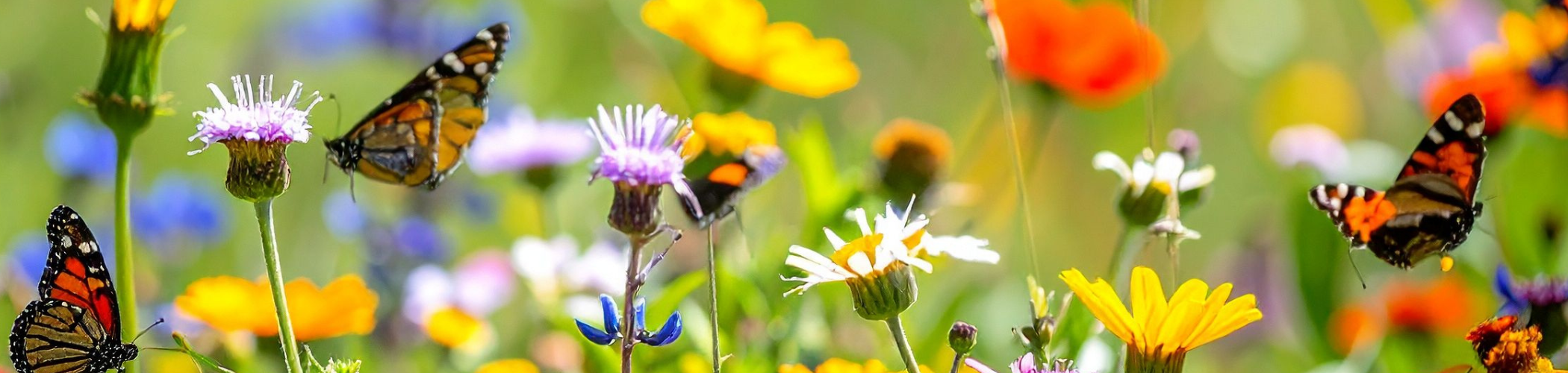
Our sanctuary is a safe haven for both flora and fauna. Our diverse arrays of flowers strategically attract pollinators like bees and butterflies, catalyzing a cascade of positive change.
Each bloom is a beacon, drawing in vital pollinators essential for crop production and ecosystem stability, ensuring food security. As gardens flourish and habitats thrive, they foster biodiversity, beautify surroundings, and cultivate a sustainable legacy for generations to come.

Why we are planting for pollinators
A healthy community buzzes with pollinators
Pollination is an essential part of plant reproduction. Pollinators like bees, butterflies, and birds help plants reproduce by transferring pollen from one plant to another. This process is vital in the production of many crops and plays a key role in maintaining biodiversity.

How Can I attract Polinaters
Plant a diverse selection of native wildflowers, shrubs, and trees that bloom in succession from spring through fall to support our pals at each stage of their season.
Avoid the use of chemical pesticides and fertilizers, which can kill or harm bees, butterflies, and other beneficial insects.
Create essential habitat by leaving some bare soil for ground-nesting bees and allowing dead stems or leaf litter to remain over the winter. Leaving some areas unmulched or having a wild patch of weeds like clover and dandelion can provide essential food and habitat. Stems and twigs provide shelter and nesting sites for many overwintering bugs.
What are the main Pollinaters
British Columbia’s main pollinators are:
- Butterflies – Swallowtails (Western Tiger), Whites/Sulphurs (Cabbage White), Fritillaries, Blues (Silvery Blue), Commas (Satyr), and Skippers
- Bees – over 450 native species including bumble bees, sweat bees, mining bees, and mason bees, alongside the non-native Western honey bee
- Hummingbirds – Anna’s and Rufous
- Moths
- Wasps
- Beetles
- Hoverflies
What are the best flowers to plant
The best flowers to plant in South Coastal British Columbia to attract butterflies include a mix of native species that provide nectar and act as host plants for larvae (where the eggs are laid on the plant that the caterpillars will eat to help them grow into butterflies). To keep butterflies returning, plant for their caterpillars with a variety of hosts! A mix of native species and hardy perennials that provide continuous blooms from spring to fall provide consistant feeding, breeding and shelter resources for pollinators throughout their seasons. Native plants are especially beneficial for supporting local native bees, which often emerge early in the season.
Top Native Plants for Coastal BC
- Douglas Aster (Symphyotrichum subspicatum): A key late-summer food source for butterflies, bees, and painted lady caterpillars.
- Goldenrod (Solidago sp.): A vital late-season nectar source that attracts butterflies, bees, and beneficial insects.
- Pearly Everlasting (Anaphalis margaritacea): Key larval host plant for the Painted Lady butterfly.
- Yarrow (Achillea millefolium): A hardy perennial that thrives in dry summer conditions and attracts butterflies and beneficial insects.
- Wild Strawberry (Fragaria virginiana): Offers spring nectar and acts as a larval host plant for butterfly eggs.
- Coastal Lupine (Lupinus littoralis): Excellent for improving soil quality. A majestic flower that attracts long-tongued pollinators, bumble bees and butterflies.
- Red Flowering Currant (Ribes sanguineum): A critical early spring nectar source for hummingbirds and queen bumble bees.
- Tall Oregon Grape (Mahonia aquifolium): An evergreen shrub that produces bright yellow, nectar-rich flowers in early spring.
- Stinging Nettles: hosts for Red Admiral butterflies.
- Pacific willow (Salix spp): Host for Western Tiger Swallowtail butterfly. Provides early spring nectar for Mourning Cloak butterflies.
- Mallows: Host for Painted Lady and West Coast Lady butterflies.
- Oceanspray (Holodiscus discolor): A native shrub that serves as a host plant for the Western Tiger Swallowtail.
- Blue Blossom (Ceanothus sp.): Native shrub popular with many butterfly species.
- Showy Milkweed (Asclepias speciosa): Essential for Monarch caterpillars to lay their eggs on, and serves as a nectar source for many species.
Top Non-Native Pollinator Favorites
- Lavender (Lavendula): Highly attractive to bees and butterflies throughout the summer.
- Bee Balm (Monarda): A favourite of bumble bees, butterflies, and hummingbirds.
- Cosmos (Cosmos bipinnatus): Easy to grow annual that provides constant summer blooms.
- Borage (Borago officinalis): A “super plant” for bees with edible blue flowers that bloom from June to September.
- Sunflowers (Helianthus): Act as tall beacons for pollinators and provide immense pollen resources.
- Phacelia (Phacelia tanacetifolia): Known as one of the best nectar-producers, keeping pollinators buzzing all summer.
- Purpletop Vervain (Verbena bonariensis): Known to attract Tiger Swallowtails.
- Black-Eyed Susan (Rudbeckia hirta): Adds bright yellow color and nectar in summer and fall.
- Sedum/Stonecrop (Sedum sp.): Tough groundcover providing late-season nectar and host sites for several butterflies.
- Purple Coneflower (Echinacea purpurea): A reliable, tall, nectar-rich staple.
- Honeysuckle Vines (Lonicera): Excellent for providing nectar and attracting varied pollinators.
What animals can I expect to see?
Butterflies are our favourites! We are creating a very special native butterfly garden and expect to increase the number of species we observe on the land. We will run pollinator counts throughout the summer – get in touch if you’d like to be involved in our counts and learn about the different species. Otherwise, just come on by for a walk around the garden to observe these beauties doing their thing!
Other residents and passersby include hummingbirds, bees, moths, moles, voles, insects, rabbits and a vast array of wild birds. Our Tsawwassen location benefits from stunning surrounding sea, marsh, river and woodland habitats that welcomes a magnificent collection of nesting and migratory birds – Herons and Eagles are regularly spotted hanging out overhead or in the waterway along the perimeter of the land.
WHAT TO EXPECT WHEN YOU COME VISIT US
A taste of what to expect at our floral fiesta for people, pollinators & plants to luxuriate and play in

U-Pick Flowers
Choose from an array of colours & designs to pick your flowers and create your own bouquet

Picnics and Relaxation
Enjoy a picnic in our floral tipis
surrounded by special sensory
plants for you to pet, smell & eat

Workshops
Community centered: gardening, pollinator care, nature connection, seed saving and crafting

Pollinator Playground
A sanctuary bursting with native and nectar-rich flowers for our flying friends
Support The Dream
Your donation to Petal Paradise supports a vital native plant sanctuary, creating and preserving habitats for animals, flowers, and pollinators. Funds directly aid habitat restoration, protect endangered species, and foster community education and connection. Your generosity ensures a thriving ecosystem where nature and people coexist. Join us in safeguarding Petal Paradise for future generations.